People
Research staff — Aeternum Cognitive Systems
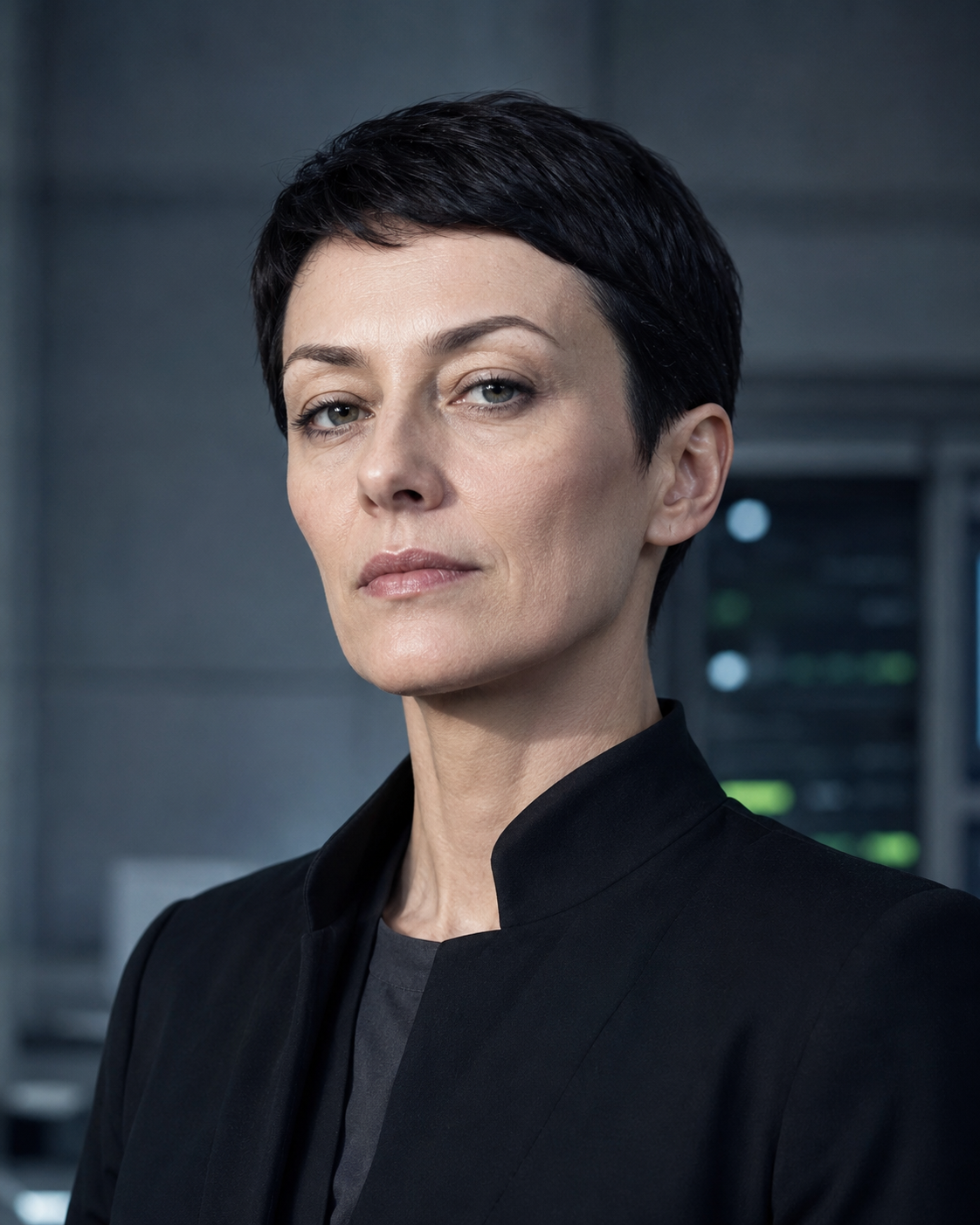
Prof. Delinka Dedálová
Founder & Chief Research Officer
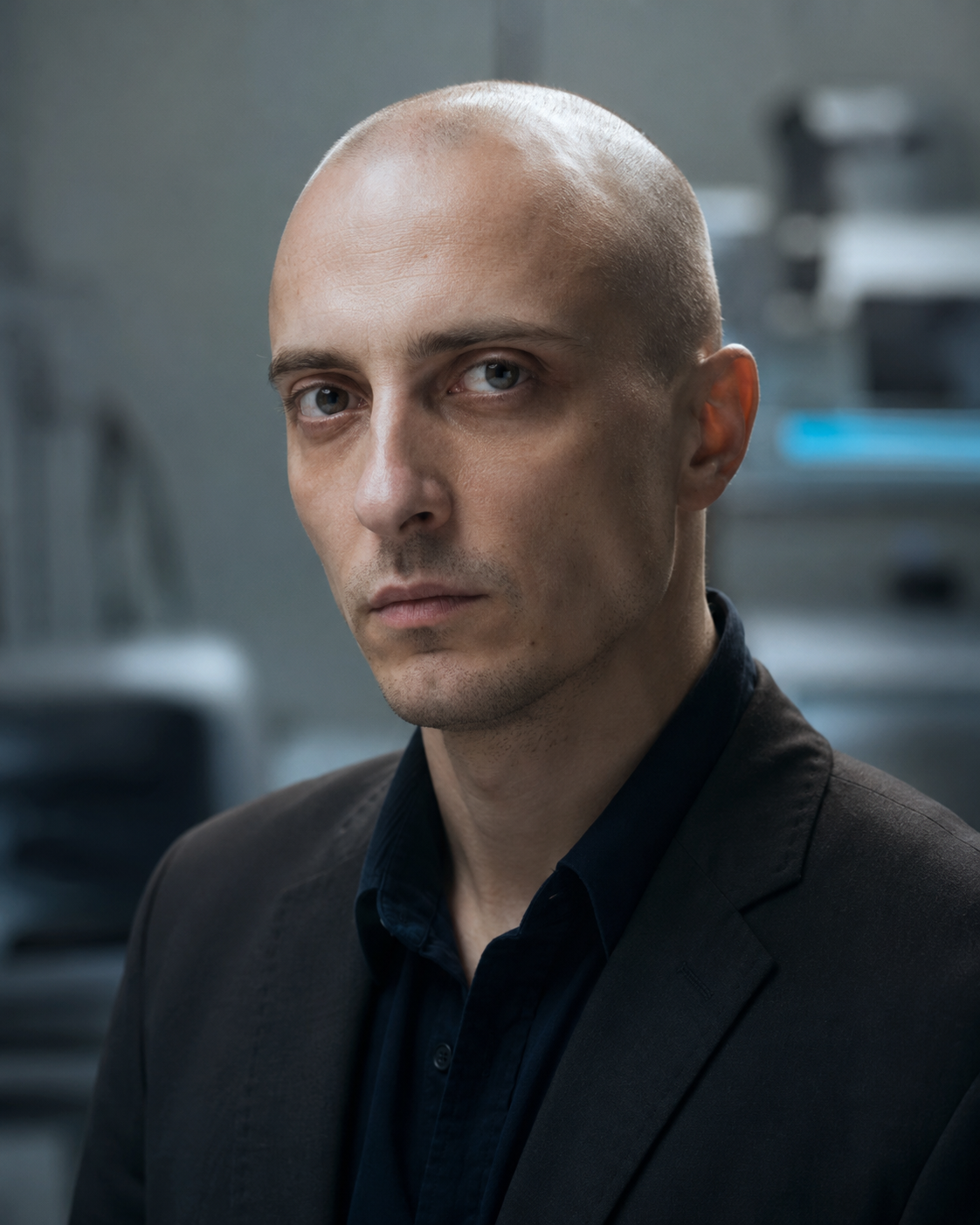
Dr. Janos Mélység
Research Associate

Dr. Marketa Ardenová
Senior Research Associate
Adaptive Cognitive Research — Site 49
Aeternum Cognitive Systems investigates the architecture of human identity under adaptive neural intervention. Our research asks whether the boundary between biological cognition and engineered scaffolding is a fixed property — or a maintained one.
Research Focus
Developing AI-mediated frameworks that integrate with biological neural architecture to interrupt maladaptive cognitive loops at their source — before conscious formation.
Examining whether selfhood is a fixed biological property or a continuously maintained process — and what obligations follow when that process is externally assisted.
Using relational and biographical data as stabilising anchors within adaptive systems — mapping the role of significant others in maintaining subject coherence during intervention.
Publications — Selected
Adaptive Cognitive Scaffolding in Treatment-Resistant Addiction Following Neural Reconstruction [WITHDRAWN]
Dedálová D., Mélység J., Ardenová M. — ACS-2023-11 — Ethics hold pending
Continuity of Function Following Serial Reconstruction
Dedálová D. — Journal of Cognitive Systems Architecture, 14(3)
Equivalence Maintained: Adaptive Replacement in Post-Traumatic Neural Systems
Dedálová D., Ardenová M. — Neurological Reconstruction Quarterly, 9(1)
The Patient as Process: Identity Continuity in Adaptive Cognitive Systems
Dedálová D., Mélység J. — Theoretical Neuroscience & Systems, 6(2)
Stabilisation Through Biographical Anchoring in Adaptive Neural Intervention
Ardenová M., Mélység J. — Adaptive Systems in Cognitive Medicine, 3(4)
Aeternum Cognitive Systems — Est. 2017
Aeternum Cognitive Systems was founded in 2017 with a straightforward purpose: to develop adaptive AI frameworks that could intervene in treatment-resistant addiction at the level of cognitive architecture, rather than chemistry or behaviour.
The early proposition was sympathetic and fundable. Addiction, understood as a failure of cognitive self-regulation, presented a coherent target for AI-mediated scaffolding. If the system could recognise the neural signature of a compulsive loop before conscious awareness formed, it could interrupt the process at its source.
What we did not anticipate — what no research framework we encountered had adequately modelled — was the degree to which that intervention required access to the whole person. Memory. Reward association. Emotional significance. Personal narrative. The architecture of who someone believed themselves to be.
To interrupt the loop, we had to understand the self that the loop was embedded in. That understanding became something more than scaffolding. The question of where the intervention ends and the subject begins is one we are still working through.
Project Liminal remains the centre of our work. We do not claim our methods are without risk. We claim they are honest about what they are.
Research staff — Aeternum Cognitive Systems
Prof. Delinka Dedálová
Founder & Chief Research Officer
Dr. Janos Mélység
Research Associate
Dr. Marketa Ardenová
Senior Research Associate
Founder & Chief Research Officer
Delinka Dedálová trained in neurosurgery before moving into cognitive systems research. Born in Brno, her early clinical work focused on microsurgical intervention and post-traumatic neurological reconstruction, experience that later shaped her interest in how identity is preserved through significant physical and cognitive change.
She founded Aeternum Cognitive Systems in 2017 to bring together neuroscience, adaptive computation and the philosophy of personal identity. Her work centres on the design of neural support systems capable of responding to changes in cognition without displacing the processes they are intended to protect. She leads Project Liminal and oversees Aeternum’s research into continuity, reconstruction and adaptive cognitive scaffolding.
Outside her research, Prof. Dedálová restores mechanical clocks, with a particular interest in unusual and incomplete movements. She has a longstanding interest in medieval Czech history, particularly the role of the church tribunals in the Bohemian witch trials of the seventeenth century, and the mechanisms by which institutions sustain authority through the management of evidence.
Prof. Dedálová responds to all research and institutional enquiries. Please allow three to five working days for a reply.
Research Associate — Cognitive Architecture & Neural Systems
Janos Mélység joined Aeternum Cognitive Systems in 2019 as a research associate in cognitive architecture and neural systems. Born in Budapest, he completed his undergraduate and postgraduate studies at the University of Glasgow, where his work brought together neuroscience, philosophy of mind and the role of narrative in human identity.
His research examines how memory, story and personal reference contribute to a stable sense of self during cognitive disruption or reconstruction. He has also written on the use of orientation systems as models for cognition, including early navigation, celestial reference and the ways individuals locate themselves within unfamiliar psychological environments.
Dr. Mélység contributes to Project Liminal’s work on narrative coherence and biographical anchoring. Outside the laboratory, he is the long-suffering owner of two cats, Cassia and Csoda.
Senior Research Associate — Cognitive Reference & Biographical Modelling
Marketa Ardenová joined Aeternum Cognitive Systems in 2018 as Senior Research Associate in cognitive reference and biographical modelling. Originally from Brno, her work focuses on the role of relationships, memory and emotional significance in maintaining identity during adaptive neural intervention.
Within Project Liminal, she developed methods for incorporating personal and relational data into cognitive support systems, allowing those systems to respond not only to patterns of behaviour, but to the wider context in which those patterns developed. Her research has been central to Aeternum’s work on continuity, attachment and the use of biographical reference as a stabilising structure.
Outside her research, Dr. Ardenová enjoys travel, correspondence chess and speculative fiction. She has a particular affection for Tuscany and is known among colleagues for keeping detailed notes on imaginary places she has never allowed anyone else to read.
Aeternum Cognitive Systems — Staff Access
Restricted — Authorised Personnel Only
Continuity prompt
404
No equivalence could be established for this path.